
As I have mentioned before, alongside this blog, I work full-time in marketing. It is a space I have grown into over many years, gradually building both experience and confidence. During that time, I have learnt a great deal about the digital landscape, particularly when it comes to understanding how people interact with content online.
One area I have naturally gravitated towards is performance tracking. While creativity sits at the heart of what I do, data provides the clarity. It tells me what is working, what is not, and where there is room to evolve. So today, I wanted to share the key metrics I monitor on my site, and why I prioritise these over the endless stream of data points available.

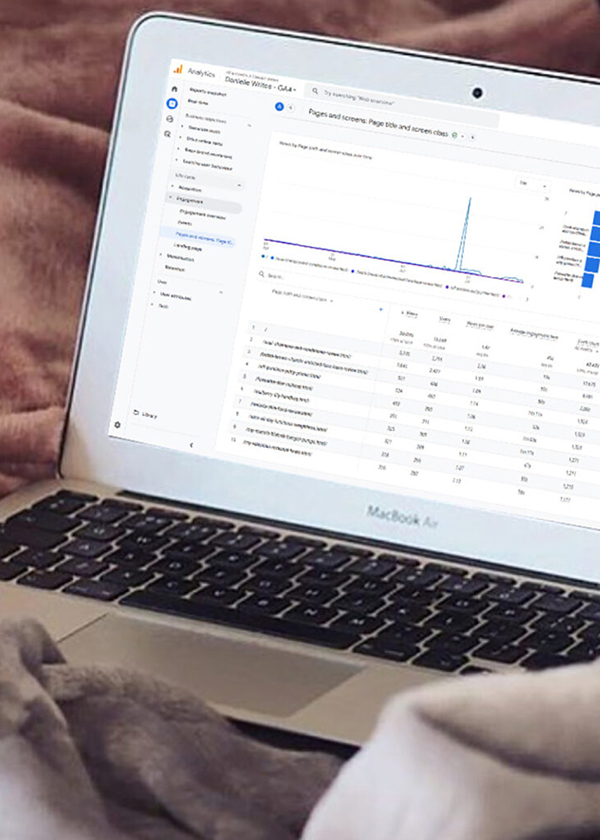
Users
One of the first metrics I always look at is the number of users visiting my site. It provides a clear, high-level view of how many people I am reaching and how that number is growing over time. It is, in many ways, the foundation of understanding overall site performance.
From there, I can dive deeper into the detail. I look at the balance between new and returning users, how long visitors are staying on the site, and how they move between pages. These insights help me understand not just how many people are visiting, but how they are engaging once they arrive.
Page Visitors
Alongside overall user numbers, I closely monitor page-level performance. This allows me to see which pieces of content are attracting the most attention and which ones are being revisited over time.
By identifying these high-performing pages, I can start to recognise patterns. What topics resonate, what formats work best, and what my audience naturally gravitates towards. It is not about chasing traffic for the sake of it, but about using that information to guide future content in a more intentional way.
Traffic Sources
Understanding where my traffic comes from is another essential piece of the puzzle. Within tools like Google Analytics, traffic is typically broken down into categories such as organic, paid, social, referral, and direct.
For me, this insight is incredibly valuable when it comes to strategy. While all traffic has its place, my focus has always been on growing organic reach. It is the most sustainable way to bring people to the site, allowing content to be discovered naturally rather than relying solely on active promotion.
Bounce Rate
Bounce rate has always been a metric I pay close attention to. It highlights how many people land on a page and then leave without exploring further, which can be a useful indicator of how engaging or relevant that page is.
When I notice a higher bounce rate on certain posts, I use that as an opportunity to reassess. It might be the structure, the content, or even the internal linking. Small changes can often make a significant difference in encouraging people to stay, explore, and engage more deeply with the site.
Site Speed
Over the years, site speed has become increasingly important, particularly as search engines continue to refine how they assess user experience. A slow site does not just frustrate visitors, it can also impact visibility and performance more broadly.
Because of this, I make a point of reviewing my site speed regularly. It is not something I check once and forget. Instead, it is an ongoing process of optimisation, ensuring that pages load quickly and smoothly across all devices.
Tech Breakdown
One of the most significant shifts I have seen over time is the change in how people access content. When I first started blogging, the majority of my traffic came from desktop users. It shaped how I designed and structured everything.
Now, the landscape looks entirely different. A large percentage of my audience visits from mobile devices, and that has fundamentally changed how I approach user experience. Understanding this breakdown allows me to design my content in a way that feels seamless, regardless of how it is being consumed.
Exit Pages
The final metric I pay attention to is where users are leaving the site. Unlike bounce rate, this looks at the last page someone visits before exiting, providing insight into where journeys naturally come to an end.
By analysing exit pages, I can identify opportunities to extend that journey. Whether that is through stronger internal linking, clearer calls to action, or simply more engaging content. It is about gently encouraging people to stay a little longer, rather than letting their experience end too abruptly.
Final Thoughts
While there are countless metrics available, I have found that focusing on a core set makes everything far more manageable and meaningful. It is not about tracking everything, it is about tracking the right things.
At the end of the day, data should support your content, not overwhelm it. Understanding where you are is always the first step towards improving where you are going. And for me, these metrics provide the clarity I need to keep everything moving in the right direction.


